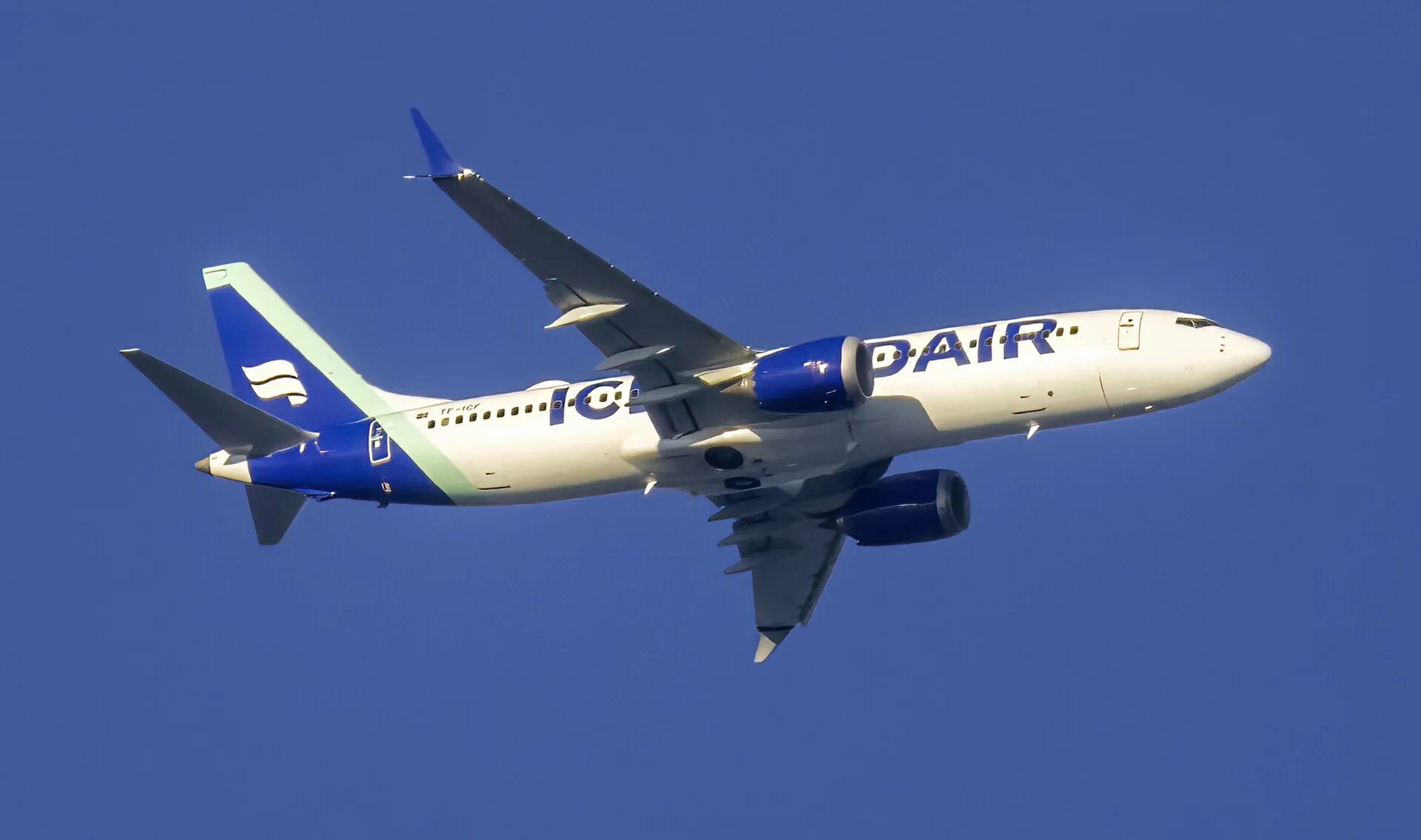
07 / Arrival
Stabilised approach standards
A good landing starts with the willingness not to force one.
The pilot standard
Operational brief
A good landing starts with the willingness not to force one.
A simple standard for energy management, configuration, stable gates and decisive go-arounds on every fleet type.
By the end
01 / Energy
Solve height and speed before they become the same problem.
Build the arrival backwards from the runway. Use sensible descent planning, observe restrictions and configure early enough that drag is added deliberately rather than as a last-minute rescue.
If ATC keeps the aircraft high or fast, state what is needed. Track miles, reduced speed or a vector may restore the plan; diving while extending every drag device usually does not.
02 / Stable criteria
At the gate, every major variable should be quiet.
Use 1,000 feet above touchdown in instrument conditions and 500 feet in visual conditions as the Icelandair Virtual training gates unless the aircraft procedure requires an earlier gate.
By the applicable gate, the aircraft should be on the correct lateral and vertical path, in landing configuration, at the planned target speed, using a normal descent rate and thrust setting, with required checklists complete.
- Correct runway track and glidepath
- Landing gear and planned flap selected
- Speed within the aircraft’s briefed tolerance
- Only normal corrections required
- Landing checklist complete
03 / Go-around
Decide, announce, fly.
Apply go-around thrust, set the correct pitch or follow the flight director, confirm a positive climb and configure in the published sequence. Maintain the missed-approach path unless ATC assigns something different.
Tell ATC after the aircraft is under control. A go-around is a normal outcome of a sound approach policy, not a failed landing attempt.
“Iceair four five one going around.”
“Iceair four five one, roger, fly published missed approach.”
04 / Review
Use the next circuit to remove the original problem.
Identify why the approach destabilised: late descent, excess speed, incomplete setup, weather, traffic spacing or an automation surprise. Change the setup before trying again.
Recheck fuel, weather and landing performance. If the same threat remains or the margin is narrowing, divert while the decision is still straightforward.
Before you fly
Five checks.
Then connect.
Approach and missed approach fully briefed
Landing performance complete
Configuration plan supports the stable gate
Go-around altitude and modes set
Diversion remains available
Primary references
Go to the
source.
Operational details change. Verify revision dates and use current charts, aircraft documentation and active ATC instructions for every flight.